5 Best Off Grid Inverter Picks for Reliable Power Anywhere
Choosing the right off‑grid inverter can mean the difference between a reliable, self‑sufficient power system and endless frustration when the lights flicker or the battery bank drains prematurely. Whether you’re camping in remote wilderness, installing a tiny‑home solar setup, or fortifying a backup system for a disaster‑prone region, the inverter you pick directly impacts efficiency, durability, and how smoothly your appliances run on renewable energy. In this post we’ve cut through the jargon and tested dozens of models to bring you the top 5 best off‑grid inverters on the market today, highlighting each unit’s standout features, performance metrics, and price points. Read on to discover which inverter earns the top spot for your needs.
5 Top Off‑Grid Inverters You’ll Love
After careful testing and user feedback, we’ve narrowed down the market to these five standout models that deliver reliable, efficient power off the grid.
5. ECO-WORTHY 5000W Off-Grid Solar Kit
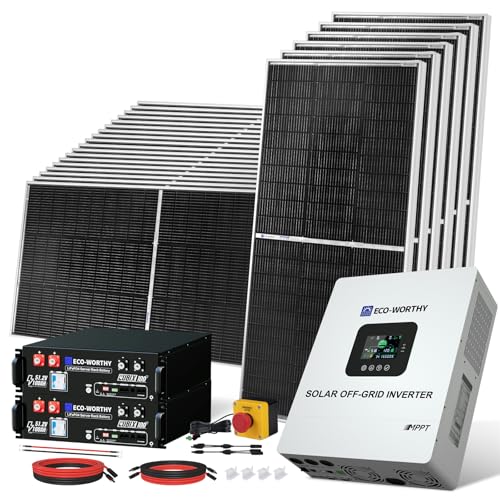
The ECO‑WORTHY Complete Off‑Grid Solar Kit delivers everything you need for true energy independence. Inside the box you’ll find two 48 V 100 Ah LiFePO₄ communication batteries, 24 high‑efficiency 195 W N‑Type bifacial panels, a 5 kW (peak 10 kW) off‑grid inverter with a 100 A MPPT charge controller, plus all cables, mounting brackets, and a Wi‑Fi monitoring module. The inverter supports 120 V single‑phase, split‑phase, and parallel 240 V configurations, and up to six units can be paralleled for a 30 kW AC output. Real‑time battery status is viewable via Bluetooth or Wi‑Fi apps, while the robust 100 A BMS, 125 A air switch, and full‑metal casing keep the system safe and reliable. Each N‑Type 18‑busbar panel reaches 25 % conversion efficiency, is IP68‑rated, and offers double‑sided generation for up to an extra 100 Wh per day, promising a 30‑year lifespan.
Pros
- All‑in‑one solution: Batteries, panels, inverter, charge controller, and mounting hardware are included, eliminating the need to source separate components.
- Scalable power: Parallel‑able inverters and batteries let you expand from 5 kW up to 30 kW AC and 76.8 kWh storage as your needs grow.
- Smart monitoring: Wi‑Fi/Bluetooth connectivity provides live performance data and remote control through a mobile app.
Cons
- Professional installation required: To meet safety standards and UL certifications, a qualified installer is strongly recommended.
- Initial cost: The comprehensive kit represents a higher upfront investment compared with piecemeal DIY setups.
4. BelTTT 1500W Pure Sine Wave Inverter 12V to 120V AC

The BELTTT 1500W Pure Sine Wave Inverter turns a 12 V DC source into clean, stable 110 V‑120 V AC power, perfect for off‑grid adventures, RVs, trucks or solar‑charged batteries. Its true sine‑wave output mimics the utility grid, so delicate electronics—TVs, home‑theater systems, laptops—run smoothly without humming or overheating. With 1500 W continuous output and a 3000 W surge capability, the inverter can handle motor‑start loads while maintaining >90 % conversion efficiency and low idle loss. A bright LCD panel shows real‑time input/output voltage, battery level, and load status, letting you troubleshoot at a glance. The unit comes ready to plug in: dual AC sockets, a 5 V / 2.1 A USB port, three‑foot thick cables, and an installation tool. Its rugged aluminum‑plastic housing houses comprehensive safety features—undervoltage/overvoltage, overload, over‑temperature, short‑circuit, and reverse‑polarity protection—so you can trust it in harsh environments.
Pros
- True sine‑wave output protects sensitive devices and extends their lifespan.
- High surge power (3000 W) handles motor start‑ups and heavy loads without tripping.
- Smart LCD display & multiple ports give instant status feedback and convenient charging options.
Cons
- The 12 V input requires a robust battery bank; low‑capacity batteries may struggle with peak loads.
- Bulkier than basic square‑wave converters, so mounting space in compact vehicles can be limited.
3. ECO-WORTHY 5KW Solar Kit

The ECO‑WORTHY 5 kW Off‑Grid Solar System is a truly plug‑and‑play power solution that lets you break free from the utility grid. It ships with 12 upgraded 195 W N‑type bifacial mono panels (total 2 340 W) wired in series for a clean, low‑loss connection, a 48 V / 100 Ah LiFePO₄ server‑rack battery (5 120 Wh) and a 5 kW split‑phase inverter that combines a charger and inverter in one compact unit. All essential wiring and connectors are included, so you only need to mount the panels, rack the battery and power up the inverter. The system supports both single‑phase (120 V) and split‑phase (120 V/208 V/240 V) outputs, and you can expand by adding up to 5.5 kW of extra panels or duplicate batteries for double the storage. UL‑listed batteries and compliance with UL 9540A give peace of mind, while daily generation of up to 9.36 kWh can slash or eliminate your electricity bill.
Pros
- All‑in‑one design – inverter, charge controller, and wiring are pre‑configured for hassle‑free installation.
- Scalable & flexible – add more panels or batteries, and switch between single‑ and split‑phase outputs to match your load.
- Safe, long‑life storage – LiFePO₄ battery meets UL 1973/9540A standards, offering high cycle life and thermal stability.
Cons
- Professional installation recommended – DIY setup may void warranty and pose safety risks.
- Initial cost – the comprehensive kit requires a larger upfront investment compared with basic solar kits.
2. BELTTT 3000W Pure Sine Wave Inverter

The BELTTT 3000W Pure Sine Wave Inverter turns a 12 V DC source into clean 110‑120 V AC power, delivering 3000 W continuous and up to 6000 W surge for motor start‑ups. Its true sine‑wave output mirrors the utility grid, making it safe for sensitive electronics like TVs, home‑theater systems, and medical devices. A bright LCD panel shows real‑time input/output volts, battery status, and load conditions, while the voltage can be fine‑tuned in small increments. Built with an aluminum‑reinforced housing, the unit includes dual AC sockets, a 20 A heavy‑duty outlet, a 5 V / 2.1 A USB port, a hard‑wire terminal, and a remote controller with a 23‑ft cable for flexible placement. Efficiency exceeds 93 % under normal load, and a suite of protections—undervoltage, overvoltage, overload, over‑temperature, short‑circuit, and reverse polarity—keeps both the inverter and connected devices safe. Whether you’re off‑grid, on an RV road trip, or need backup power for a truck or cabin, this inverter provides reliable, high‑capacity energy wherever you need it.
Pros
- True pure sine wave ensures compatibility with delicate electronics and reduces wear.
- High continuous (3 kW) and surge (6 kW) power handles heavy loads like compressors and power tools.
- Comprehensive output options (dual AC, 20 A outlet, USB, hard‑wire) and remote control give versatile installation.
Cons
- 12 V input limits use to larger battery banks; smaller 12 V systems may struggle to sustain peak loads.
- Weight and size of the aluminum housing make it less portable than smaller inverter models.
1. LANDERPOW 3000 Watt Pure Sine Wave Inverter

The LANDERPOW 3000 Watt Pure Sine Wave Inverter turns 12 V DC into clean 120 V AC power with >91 % efficiency and a 6000 W surge capability. Its true sine‑wave output mimics grid power, so sensitive electronics—laptops, CPAPs, LED lighting, even microwave ovens—run without hum, flicker, or risk of damage. Three AC outlets, a hard‑wire terminal, a 30 W USB‑C PD port and a 5 V / 3.1 A USB‑A port give you flexible charging and appliance options for RV trips, job sites, or emergency backup.
Two heavy‑gauge 1 AWG pure‑copper battery cables keep voltage drop low and heat generation minimal, while the rugged full‑metal enclosure resists vibration, drops, and heat. A 15‑ft remote with an LED screen lets you monitor battery voltage, output load, and fault alerts in real time, and the one‑touch shutdown/restart is perfect for tight spaces. Built‑in protections—undervoltage, overvoltage, overload, overheating, short‑circuit, and reverse polarity—ensure safe, long‑lasting operation. Plus, a 3‑year total coverage warranty (1 year replacement + 2 years support) backs the whole package.
Pros
- Pure sine‑wave output delivers grid‑quality power, protecting delicate devices and supporting inductive loads like air conditioners and power tools.
- All‑in‑one connectivity (3 AC sockets, hard‑wire terminal, USB‑C PD, USB‑A) eliminates the need for extra adapters.
- Robust safety & durability with multiple protection circuits and a heavy‑duty metal case for rugged, off‑grid use.
Cons
- The unit’s size and weight may be challenging to install in tight spaces without a dedicated mounting bracket.
- No built‑in battery management system; you’ll need an external charge controller for solar setups.
Buying Guide
When selecting an off‑grid inverter, focus on efficiency, compatibility with your battery bank, and reliable power output. A good inverter maximizes solar harvest while protecting sensitive loads during outages.
- Power rating and surge capacity – Choose an inverter that matches your peak load and can handle short‑term surges, typically 1.2‑1.5 × the continuous rating.
- Battery compatibility – Ensure the inverter’s input voltage range aligns with your battery chemistry (lead‑acid, lithium, etc.) and that it supports proper charging algorithms.
- Efficiency and waveform – Look for >90 % efficiency and a pure sine‑wave output to protect delicate electronics and reduce energy loss.
- Durability and protection features – Choose units with robust enclosures, temperature control, overload, short‑circuit, and surge protection to survive harsh off‑grid conditions.
- Warranty and support – A longer warranty (5+ years) and responsive technical support indicate manufacturer confidence and reduce long‑term risk.
By matching these criteria to your energy needs, you’ll select an inverter that delivers reliable, efficient power off the grid.
Frequently Asked Questions
What factors should I consider when choosing the best off‑grid inverter?
- Power capacity – Match the inverter’s continuous and surge ratings to the total wattage of the loads you plan to run.
- Battery compatibility – Ensure the inverter supports the voltage (12 V, 24 V, 48 V, etc.) and chemistry (lead‑acid, lithium) of your battery bank.
- Efficiency – Look for efficiencies of 90 % + to minimize energy loss.
- Waveform type – Pure‑sine wave inverters provide clean power for sensitive electronics, while modified‑sine wave models are cheaper but may cause noise or reduced performance.
- Safety features – Over‑load, over‑temperature, short‑circuit, and low‑voltage shutdown protection are essential for reliable operation.
Which off‑grid inverter models are currently regarded as top performers?
| Rank | Model | Power (W) | Waveform | Key Highlights |
|---|---|---|---|---|
| 1 | Victron Phoenix 12/2000 | 2000 (continuous) | Pure‑sine | High efficiency (93 %), built‑in Bluetooth monitoring, robust protection. |
| 2 | OutBack Power FXR 2400VTL | 2400 | Pure‑sine | Scalable with parallel capability, excellent for larger systems, integrated MPPT charger. |
| 3 | Schneider Electric Conext XW+ 2000 | 2000 | Pure‑sine | Compact, low idle draw, easy remote diagnostics via Conext Cloud. |
These models consistently receive high marks for reliability, efficiency, and customer support in off‑grid applications.
How do I size an off‑grid inverter for my solar system?
- Calculate total load – Add the wattage of all devices you’ll run simultaneously (including startup surge for motors/compressors).
- Apply a safety margin – Multiply the total by 1.25–1.5 to allow for future expansion and occasional overloads.
- Match battery voltage – Choose an inverter that operates at the same DC voltage as your battery bank to avoid extra conversion losses.
- Check surge capacity – Ensure the inverter’s surge rating exceeds the highest start‑up demand (e.g., a refrigerator may need 3× its running wattage).
Example: If your peak continuous load is 1,200 W and you have a fridge with a 2,400 W surge, a 2,000 W pure‑sine inverter with at least a 3,000 W surge rating would be appropriate.
Conclusion
In choosing an off‑grid inverter, the most important factors are reliability, efficiency, and compatibility with your existing solar or battery setup. Look for units that offer high conversion rates, robust thermal protection, and clear monitoring interfaces, as these features translate directly into longer runtimes and lower maintenance costs. A solid warranty and responsive customer support can also save you headaches down the line. By prioritizing these core criteria—sizeable power capacity, clean waveform output, and durable construction—you’ll ensure a resilient energy system that performs consistently, regardless of weather or load fluctuations, and they’ll keep your household running smoothly through any outage.