7 Best All-in-One Solar Charge Controller Inverter
Whether you’re powering a tiny cabin, an off‑grid RV, or a full‑size solar array, the heart of any reliable system is an all‑in‑one solar charge controller inverter that can seamlessly manage power conversion, battery charging, and grid interaction. Choosing the right unit isn’t just about efficiency; it impacts safety, longevity of your batteries, and the overall cost‑effectiveness of your renewable setup. With countless models flooding the market, it’s easy to get lost in technical specs and marketing hype. In this post we’ve cut through the noise to spotlight the seven top‑rated all‑in‑one controllers that combine performance, durability, and smart features, so you can make an informed decision. Let’s dive in.
7 Best All-in-One Solar Charge Inverter Controllers
We’ve tested dozens of models to pinpoint the seven most reliable, efficient, and feature‑rich all‑in‑one solar charge‑controller inverters for you.
7. Busbyr 3600W Hybrid Solar Inverter

The Busbyr 3600W Hybrid Solar Inverter All‑in‑One packs a pure‑sine‑wave inverter, a 120 A MPPT solar charge controller, and a 100 A AC battery charger into a single, compact chassis. Rated at 3600 W continuous (7200 W surge), it’s built for home backup, off‑grid cabins, RVs, and workshops. The integrated MPPT controller accepts up to 4200 W of PV panels (60‑500 VDC, max 16 A) and can feed loads directly from solar when the battery is disconnected—provided the PV voltage exceeds 120 V.
A clean 110 V/120 V pure sine wave output mimics grid power, so sensitive electronics, refrigerators, and inductive loads run without flicker or noise. The unit works with any 24 V battery chemistry—AGM, Gel, lead‑acid, lithium‑ion, or LiFePO4—and even supports battery‑less operation for pure solar use. Smart hybrid logic lets you prioritize solar, battery, or utility power, while an LCD screen displays real‑time voltage, current, and status; a remote‑monitoring module is available as an accessory. Built‑in silent fans and comprehensive overload, over‑temperature, over‑current, and short‑circuit protections keep the system safe and reliable, while intelligent charging extends battery life.
Pros
- All‑in‑One design eliminates the need for separate inverter, charger, and controller, saving space and installation time.
- High‑efficiency 120 A MPPT maximizes solar harvest and allows direct PV‑to‑load operation, reducing reliance on batteries.
- Pure sine wave output ensures compatibility with all household appliances and sensitive electronics.
Cons
- The 120 V minimum PV voltage requirement for direct solar operation may limit low‑voltage panel configurations.
- Remote monitoring is optional and sold separately, adding extra cost for full‑time off‑site visibility.
6. Anern 3600W Solar Inverter
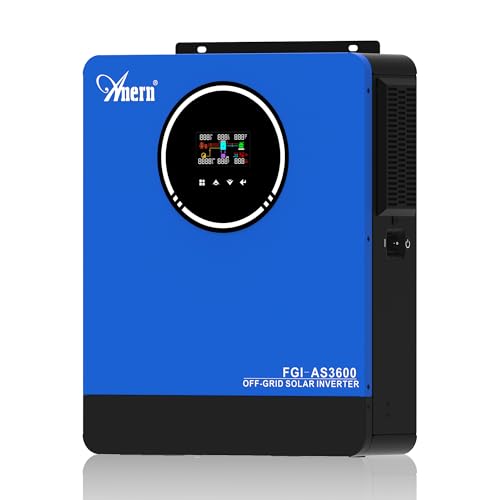
The Anern 3600W Solar Inverter is an all‑in‑one hybrid solution that turns 24 V DC from lead‑acid or lithium batteries into clean 110 V/120 V AC power. Its built‑in 120 A MPPT charge controller harvests up to 4 200 W of PV energy (60 V‑500 V input range) with 98 % conversion efficiency, while the inverter can deliver 3 600 W continuous (7 200 W peak) to lights, appliances, or tools.
A versatile operating panel lets you choose between four charging modes—solar‑only, mains‑priority, solar‑priority, or combined—plus two output styles: direct bypass or inverter output. The LCD screen and LED indicators provide real‑time data on PV input, AC output, battery state‑of‑charge, and alerts, while intuitive buttons let you set voltage thresholds, charging current, and mode priorities on the fly.
Designed for both off‑grid and grid‑linked setups, the unit includes comprehensive protection against overload, over‑temperature, over‑current, and short circuits, and features an automatic 50 Hz/60 Hz detection for seamless integration with any household or office load.
Pros
- All‑in‑one design – inverter, MPPT controller, and battery charger in a single chassis saves space and wiring complexity.
- High efficiency & power – 98 % conversion and 7 200 W peak output handle demanding appliances like air‑conditioners.
- Flexible operation – four charging modes and dual output options let you tailor the system to any energy source or load profile.
Cons
- Weight & size – the integrated design makes the unit relatively heavy and bulkier than separate components.
- Battery voltage limited to 24 V – users needing 48 V or higher battery banks will need a different inverter model.
5. LiTime LIT3000A Solar Inverter Charger

The LiTime 24 V 3000 W All‑in‑One Solar Inverter Charger combines a high‑efficiency MPPT solar controller, a pure‑sine‑wave inverter, and a smart charger in a single, compact chassis. Designed for 24 V battery banks (lead‑acid or lithium), it delivers up to 3000 W continuous power with a 9000 W surge capability, auto‑photovoltaic tracking, and seamless UPS protection. The built‑in LCD and LED indicators give real‑time insight into battery voltage, MPPT performance, AC input/output, and system status, while RS485 communication lets you integrate the unit into home‑energy‑management platforms for remote monitoring and alerts.
Key features include three charge modes (MPPT‑First, MPPT + Grid, Only MPPT), three output priority modes (MPPT First, Grid First, Inverter First), intelligent speed‑controlled cooling fans, and comprehensive protections (short‑circuit, overload, over‑temperature, voltage anomalies). A dedicated lithium‑battery activation function allows the BMS‑protected pack to start up directly from grid power, ensuring uninterrupted operation for off‑grid or hybrid setups.
Pros
- All‑in‑One design eliminates the need for separate controller, inverter, and charger, saving space and installation time.
- Flexible charge & output modes let you optimise energy flow for pure solar, grid‑assisted, or backup‑only scenarios.
- Robust communication & monitoring via RS485 and an intuitive LCD screen gives precise control and early fault detection.
Cons
- Limited to 24 V battery systems, so it isn’t a plug‑and‑play solution for 48 V or higher voltage setups.
- Advanced features may require basic networking knowledge to fully exploit RS485 integration and remote monitoring.
4. Xantrex Prosine 12/3000

The 3600 W Pure Sine Wave Solar Inverter is an all‑in‑one powerhouse designed for RVs, tiny homes, boats, and off‑grid backup. It converts 24 V DC from lead‑acid or lithium batteries to clean 110 V/120 V AC while a built‑in 120 A MPPT charge controller harvests up to 4 200 W of solar power with 98 % tracking efficiency. An LCD panel and three LED indicators give real‑time readouts of voltage, current, and load status, and Wi‑Fi connectivity lets you monitor the system from any iOS or Android device.
Key Features
– 3600 W continuous pure‑sine output, 60 Hz, 110 V/120 V AC
– MPPT charge controller: 120 A, 60‑450 V DC input range, up to 4200 W PV input
– Four charging modes (Solar‑only, Mains‑First, Solar‑First, Hybrid) and three output priorities (Solar‑First, Mains‑First, SBU)
– LCD + LED display with configurable settings, remote Wi‑Fi monitoring
– Compatible with sealed, AGM, gel, flooded, and lithium 24 V batteries
Pros
- Maximum flexibility – multiple charging and output modes let you tailor the system to any power source, from solar panels to generators.
- High efficiency – 98 % MPPT tracking and pure‑sine wave output keep energy losses low and sensitive electronics safe.
- Smart monitoring – the LCD panel and Wi‑Fi app provide instant diagnostics and remote control, perfect for off‑grid living.
Cons
- Weight and size – the integrated inverter/charger is bulkier than stand‑alone units, which may be a concern for limited RV space.
- Initial cost – the advanced MPPT controller and smart features carry a higher upfront price compared to basic inverters.
3. Renogy Roamer 48V 10000W Solar Hybrid Inverter
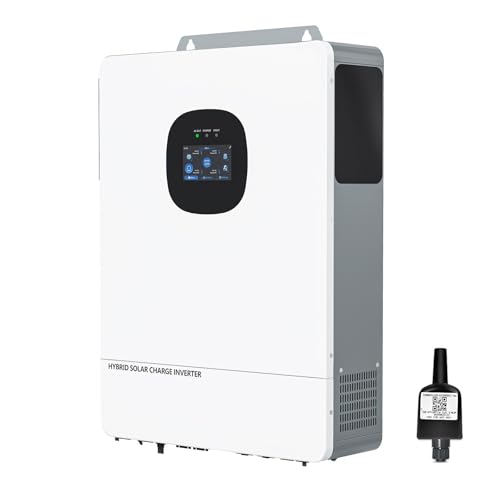
The 10000W 48 V All‑in‑One Solar Hybrid Inverter is a UL‑certified powerhouse built for North‑American off‑grid homes and RVs. With a continuous 10 kW rating and a 20 kW surge‑peak pure‑sine output, it delivers clean, interference‑free electricity to everything from heavy‑duty power tools to delicate medical equipment. The single‑box design combines a solar inverter, dual‑MPPT charger, and hybrid UPS, eliminating the need for separate controllers, chargers, or backup generators. Thanks to its battery‑free direct‑PV mode and hybrid operation, you can run loads straight from the panels or store energy in lead‑acid or lithium batteries—whichever fits your budget.
The inverter outputs 120 V/240 V single‑ and split‑phase AC, matching standard North‑American wiring. Up to six units can be paralleled, scaling the system to 60 kW for larger families, farms, or small businesses. Built‑in Wi‑Fi links the unit to a mobile app for real‑time monitoring, parameter tweaks, and instant fault alerts. During an outage, the UPS switches in 0 ms, keeping refrigerators, lights, and critical devices running without interruption.
Pros
- UL certification & pure‑sine wave ensures safe, reliable power for both heavy and sensitive loads.
- All‑in‑one design saves installation space and cost by integrating inverter, charger, and UPS.
- Wi‑Fi remote control provides easy monitoring and instant alerts from a smartphone.
Cons
- The high power rating may be overkill for tiny cabins or single‑vehicle RVs, leading to higher upfront cost.
- Dual‑MPPT and parallel capability add complexity to wiring; professional installation is recommended.
2. LiTime 3500W Pure Sine Wave Solar Inverter, 48V DC to 120V AC

The LiTime 3500W Pure Sine Wave Solar Inverter Charger packs an MPPT charge controller, inverter, and charger into one compact, all‑in‑one unit. Designed for 48 V lead‑acid or LiFePO₄ batteries, it delivers a continuous 3500 W output with a 6000 W surge, providing clean pure‑sine power for sensitive electronics, home appliances, or cabin loads. Its smart energy manager lets you choose from four charging modes (Solar Only, Utility Priority, Solar Priority, Hybrid) and three output priorities, letting the system automatically track solar production and switch between grid, solar, or battery power for maximum cost savings. A built‑in UPS kicks in within milliseconds during an outage, keeping critical devices online. Intelligent cooling fans and comprehensive protection against short‑circuit, overload, and over‑temperature ensure reliable, long‑lasting performance. The unit also features RS485 communication and an LCD display for real‑time monitoring of battery voltage, solar input, and AC output, making integration into home energy storage systems straightforward.
Pros
- All‑in‑One design saves space and simplifies installation.
- Smart energy management with multiple charging and output modes maximizes solar utilization and reduces utility bills.
- Built‑in UPS provides instant backup for sensitive electronics during power outages.
Cons
- The 48 V system requires compatible battery banks, which may add upfront cost for users without existing storage.
- Advanced settings (RS485, multiple modes) can be overwhelming for beginners without proper guidance.
1. Xijia 3600W Hybrid Solar Inverter

The Xijia 3600W Hybrid Solar Inverter is a versatile, all‑in‑one power solution that converts 24 V DC from solar panels or batteries into clean 110‑120 V AC for homes, RVs, boats, and off‑grid cabins. Its built‑in 120 A MPPT charge controller delivers up to 98 % tracking efficiency, while the pure‑sine‑wave output (3600 W continuous, 7200 W surge) safely runs sensitive appliances—from ovens and rice cookers to TVs and fans. The unit supports 24 V lead‑acid (sealed, AGM, gel, flooded) and lithium batteries, and offers four charging modes (Solar‑only, Mains‑first, Solar‑first, Hybrid) plus three output priorities, ensuring seamless power switching and auto‑restart after an outage. An LCD screen with three LED indicators shows real‑time system data, and optional Wi‑Fi monitoring (iOS/Android) lets you check performance from anywhere.
Pros
- High‑efficiency MPPT (98 %) maximizes solar harvest and reduces charging time.
- Hybrid flexibility: four charging modes and three output priorities adapt to any grid or generator situation.
- Robust power capacity: 3600 W continuous + 7200 W surge handles most household loads without distortion.
Cons
- Wi‑Fi monitoring module is sold separately, adding extra cost for remote access.
- The 24 V battery requirement may limit compatibility with existing 12 V systems without additional hardware.
Buying Guide
When choosing the best all‑in‑one solar charge controller inverter, focus on how efficiently it converts and manages power, its ability to protect your battery bank, and whether it integrates the features you need for your specific off‑grid or hybrid setup.
- Power rating and efficiency – Select a unit whose continuous output matches your peak load and whose conversion efficiency (typically 95 % +) minimizes losses during daylight and night‑time operation.
- Charge‑controller type – MPPT controllers harvest more energy from panels than PWM, especially in low‑light conditions, so prioritize MPPT for better overall performance.
- Built‑in protections and durability – Look for overload, short‑circuit, over‑temperature, and reverse‑polarity safeguards, plus an IP‑rated enclosure that can withstand dust, moisture, and temperature extremes.
- Integrated features and expandability – Models that include LCD displays, Bluetooth or Wi‑Fi monitoring, and the ability to add extra battery banks or solar arrays give you flexibility as your system grows.
- Brand reputation and after‑sales support – Choose manufacturers with strong warranty terms, readily available replacement parts, and positive user reviews to ensure long‑term reliability.
By weighing these criteria, you’ll select an inverter‑controller that delivers reliable, efficient power while protecting your investment for years to come.
Frequently Asked Questions
What features should I look for in the best all‑in‑one solar charge controller‑inverter?
- Hybrid (MPPT) charge controller – Maximizes energy harvest from PV panels.
- Pure‑sine wave inverter – Ensures clean power for sensitive electronics.
- Integrated battery management – Includes over‑charge, deep‑discharge, temperature, and balancing protection.
- Scalable power rating – Choose a unit that matches your peak load (e.g., 2000 W, 3000 W, 5000 W) and can be paralleled for larger systems.
- User‑friendly interface – LCD or app‑based monitoring for real‑time voltage, current, SOC, and fault alerts.
- Robust safety certifications – UL, IEC, CE, and built‑in short‑circuit, overload, and reverse‑polarity protection.
Which models are currently considered the top all‑in‑one solar charge controller‑inverters?
| Model | Power Rating | Battery Compatibility | Notable Specs |
|---|---|---|---|
| Victron Quattro 48/5000/70‑Rev | 5000 W (continuous) | 48 V Li‑ion, AGM, Gel | Dual‑MPPT, Bluetooth, 70 A each side |
| Renogy Rover 40A 12/24 V | 2000 W (continuous) | 12 V/24 V lead‑acid, LiFePO₄ | MPPT, LCD, remote monitoring via app |
| SMA Sunny Boy Storage 5.0 | 5000 W | 48 V Li‑ion, LiFePO₄ | Integrated battery, grid‑tie ready, Wi‑Fi monitoring |
| Eco-Worthy 3000W Hybrid | 3000 W | 12‑48 V (all chemistries) | MPPT, pure‑sine wave, LCD, overload protection |
These units consistently receive high marks for efficiency (≥95 % inverter, ≥98 % MPPT), durability, and support.
How do I size an all‑in‑one controller‑inverter for my off‑grid system?
- Calculate daily energy consumption – Sum the watt‑hours of all loads (e.g., 150 Wh LED lights + 500 Wh refrigerator + 200 Wh phone charging = 850 Wh/day).
- Determine required battery capacity – For 2‑day autonomy at 50 % depth‑of‑discharge:
[
\text{Battery Ah} = \frac{\text{Daily Wh} \times 2}{\text{System Voltage} \times 0.5}
]
Example: 850 Wh × 2 ÷ (48 V × 0.5) ≈ 71 Ah. - Select inverter power rating – Choose a continuous rating ≥ 1.5 × peak load. If the highest simultaneous load is 800 W, a 1200 W (or higher) inverter is safe.
- Match charge controller current –
[
I{\text{MPPT}} = \frac{\text{PV Wattage}}{V{\text{MPPT}}}
]
For a 600 W PV array at 36 V Vmppt → ≈ 17 A. Pick a controller rated at least 25 % higher (≈ 20 A). - Allow for expansion – If you may add panels or batteries later, select a unit with headroom (e.g., a 3000 W inverter with a 60 A MPPT controller).
Following this method ensures the controller‑inverter can handle your load, charge the battery efficiently, and accommodate future growth.
Conclusion
Choosing an all‑in‑one solar charge controller inverter means prioritizing efficiency, reliability and simplicity in one compact package. The best options deliver high conversion rates while safeguarding batteries with robust protection features, and they scale smoothly from modest off‑grid cabins to larger residential systems. Integrated monitoring and user‑friendly interfaces streamline installation and ongoing maintenance, reducing the need for separate components and wiring complexities. By focusing on durable construction, smart load‑management capabilities, and competitive pricing, these hybrid units empower owners to maximize renewable energy harvest, lower long‑term operating costs, and enjoy a hassle‑free solar experience.