
5 Best Generac Generator Models for Home Power
When the lights flicker or a storm knocks out power, a reliable generator can be the difference between comfort and chaos, and Generac has built a reputation for delivering just that. But with a crowded lineup ranging from portable units to whole‑home standby models, picking the right one isn’t always straightforward. In this guide we cut through the specs, noise levels, fuel efficiency, and price points to spotlight the five Generac generators that consistently earn top marks from homeowners and professionals alike. Whether you need backup power for a weekend cabin or a seamless solution for your entire house, our review will help you make an informed, confident choice, so you can power through any outage with peace of mind.
5 Top Generac Generators You Need to Know
Whether you’re prepping for storms or seeking reliable backup power, these five Generac models deliver unmatched performance and peace of mind.
5. Generac Guardian 10kW Standby Generator

The Generac Guardian 10kW Home Standby Generator delivers reliable, whole‑house power when you need it most. Paired with a 100 Amp, 16‑circuit transfer switch, it automatically detects an outage and switches on, keeping lights, appliances, and essential systems running without any manual effort. Its 10 kW True Power™ engine provides clean, stable electricity with less than 5 % harmonic distortion, so sensitive electronics stay protected. Thanks to the built‑in 7172 Mobile Link Wi‑Fi module, you can monitor performance, receive maintenance alerts, and control the unit from anywhere using the Generac app. Engineered in the USA with a purpose‑built G‑Force engine, the generator runs quieter, burns fuel more efficiently, and requires minimal upkeep. Installation should be performed by a licensed electrician, ensuring the system complies with local codes and operates safely.
Pros
- Automatic whole‑house backup via a robust 100 A transfer switch, eliminating manual start‑up.
- Remote monitoring through Wi‑Fi connectivity keeps you informed of status and service needs.
- Clean, efficient power with True Power technology and low‑maintenance, fuel‑saving engine.
Cons
- Professional installation required, adding extra cost and coordination.
- Fuel source limited to natural gas or liquid propane, which may not suit all locations.
4. Generac GP2500i Portable Generator

The Generac 2,500‑Watt GP2500i is a lightweight, compact inverter generator built for the demands of home backup, camping, and RV adventures. Its TruePower™ technology delivers clean, stable electricity that safely powers sensitive electronics, tools, and small appliances, while the built‑in handle and compact chassis make transport a breeze. Fuel‑efficiency is maximized with Economy Mode, which automatically adjusts engine speed to reduce consumption, and COsense™ technology monitors exhaust gases for smarter power management. The unit also features LED status indicators for low‑oil, overload, and ready‑to‑use alerts, a USB port for quick device charging, and parallel‑ready capability, allowing you to double output when needed.
Pros
- Clean, stable power – TruePower™ protects delicate electronics and ensures reliable performance.
- Ultra‑portable design – Lightweight frame, built‑in handle, and compact size simplify moving and setting up the generator anywhere.
- Fuel‑saving & smart features – Economy Mode and COsense™ reduce fuel use and enhance safety, while LED alerts keep you informed.
Cons
- Limited maximum output – At 2,500 W it may not support multiple high‑draw appliances simultaneously.
- No built‑in battery backup – Requires external batteries or a separate UPS for seamless power transition during outages.
3. Generac Guardian 22kW Home Standby Generator

The Generac Guardian 22kW Home Standby Generator delivers reliable, whole‑house power when the grid fails. Paired with a 200 Amp NEMA 3R smart transfer switch, it automatically senses an outage and seamlessly shifts your home onto clean, stable 22,000 W of electricity—so lights, appliances, and HVAC keep running without a hitch. The unit runs on natural gas or liquid propane, giving you flexibility based on your fuel source. Built in the USA, the purpose‑crafted G‑Force engine is low‑maintenance, quieter, and more fuel‑efficient than older models, while Generac’s True Power Technology keeps harmonic distortion under 5 % for safe, appliance‑friendly power. With the 7043 Mobile Link Wi‑Fi module, you can monitor performance, receive maintenance alerts, and control the system from anywhere using the Generac app. Installation should be performed by a licensed electrician, and the package comes with a 5‑year limited warranty for long‑term peace of mind.
Pros
- Automatic whole‑house protection via the 200 Amp smart transfer switch eliminates manual start‑up during outages.
- Remote monitoring through Wi‑Fi connectivity lets you check status and receive alerts from any location.
- High‑quality 22 kW output with low harmonic distortion ensures clean power for sensitive electronics and large appliances.
Cons
- Professional installation required, which adds extra cost and scheduling considerations.
- Fuel choice limited to natural gas or propane, so homes without access to these utilities will need a propane delivery plan.
2. Generac GP15000i Portable Generator

The Generac 12,500‑Starting‑Watt Tri‑Fuel Portable Generator is built for every kind of power outage or job‑site demand. Its 500 cc OHV engine delivers 9,500 running watts and a punchy 12,500‑watt surge, while a 7.5‑gal steel tank gives up to 9.5 hours of runtime at 50 % load on gasoline. A simple fuel‑selector dial lets you switch instantly between gasoline, liquid propane, or natural gas, giving you the flexibility to use whatever fuel is most convenient or available.
Starting is a breeze thanks to the push‑button electric start and included rechargeable battery—no more wrestling with a pull‑cord in cold weather. Safety is front‑and‑center with COsense carbon‑monoxide detection, which continuously monitors CO levels and shuts the unit down while sounding an alert if dangerous concentrations are detected. The rugged steel‑tube cradle frame, weather‑proofed outlets, and never‑flat wheels with a fold‑down handle make it a durable, transport‑ready workhorse for construction sites or home backup.
Pros
- Tri‑fuel versatility eliminates fuel‑supply worries and maximizes runtime options.
- Electric start & battery provides instant power with minimal effort, even in cold conditions.
- COsense protection safeguards occupants from hidden carbon‑monoxide hazards.
Cons
- The 7.5‑gal tank, while sufficient for many scenarios, may require more frequent refueling on prolonged, high‑load use.
- At 125 lb, the unit is portable but may need two people for moving it over long distances or up stairs.
1. Generac 12,500 Portable Generator
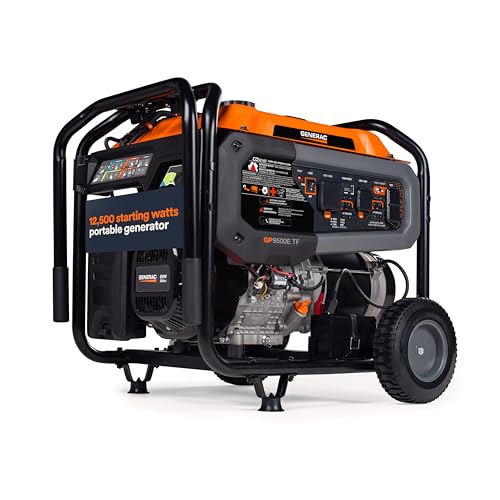
The Generac 12,500 Starting Watt Tri‑Fuel Portable Generator delivers reliable power wherever you need it—whether as a home backup, on a jobsite, or on the road with an RV. Its robust OHV engine is paired with a large‑capacity steel fuel tank and an integrated fuel‑gauge, providing up to 10.5 hours of runtime at 50 % load on gasoline alone. The generator is tri‑fuel capable; a simple selector lets you switch between gasoline, propane, or natural gas without shutting the unit down, while COsense™ technology continuously monitors carbon‑monoxide levels and automatically shuts the unit off for safety. Covered outlets, a rugged steel‑tube cradle, and never‑flat wheels protect the unit from harsh environments and make transport effortless. An included battery powers the electric start, eliminating the need for manual cranking and ensuring you’re ready for any outage with just a push of a button. Quiet operation and 50‑state compliance make this generator a versatile, code‑friendly power solution.
Pros
- Tri‑fuel flexibility – switch between gas, propane, or natural gas on the fly.
- Long runtime – up to 10.5 hours at half load thanks to the high‑capacity tank and efficient engine.
- Durable design – covered outlets, steel cradle, and never‑flat wheels stand up to rough handling.
Cons
- Weight – the steel construction adds heft, requiring a vehicle or trolley for moving it long distances.
- Fuel gauge granularity – the built‑in gauge provides a basic readout; precise fuel monitoring may need manual checks.
Buying Guide
When choosing the best Generac generator, focus on power output, fuel type, and reliability to match your home’s energy needs.
- Power capacity and wattage – Ensure the generator delivers enough running and starting watts for essential appliances and any future load expansions.
- Fuel source and runtime – Decide between gasoline, propane, or natural‑gas models, and verify the fuel tank size provides at least 8‑12 hours of continuous operation.
- Automatic transfer switch (ATS) compatibility – An ATS enables seamless power transition during outages, protecting sensitive electronics and reducing manual effort.
- Build quality and warranty – Look for a robust steel enclosure, corrosion‑resistant components, and a minimum three‑year warranty for peace of mind.
- Customer reviews and service network – Prioritize units with high user ratings and confirm that local dealers offer prompt maintenance and parts support.
By weighing these factors, you can select a Generac generator that delivers dependable backup power while offering long‑term value and confidence during an outage.
Frequently Asked Questions
What is the best Generac generator for home backup power?
For most residential users, the Generac Guardian Series 22kW (model 7043) is the top pick. It offers a reliable 120/240 V output, automatic transfer switch (ATS) compatibility, and a quiet‑operation inverter engine that runs efficiently on natural gas or propane.
How do I choose the right size Generac generator for my house?
- Calculate your total wattage needs – add up the starting (surge) watts of large appliances (e.g., HVAC, well pump) and the running watts of essential loads.
- Add a safety margin – 10‑20 % extra capacity helps handle unexpected loads.
- Match the generator rating – pick a Generac model whose rated output meets or exceeds your calculated total.
A common rule of thumb: a 20‑22 kW unit covers typical whole‑home needs, while a 9‑10 kW model suits smaller homes or selective‑load setups.
What maintenance does a Generac generator require to stay reliable?
- Monthly: Run the generator for 5‑10 minutes under load to keep the engine lubricated.
- Quarterly: Check oil level, coolant, and fuel connections; top up or replace oil if needed.
- Annually: Perform a full service—replace oil and filter, inspect the air filter, spark plugs, and battery, and test the automatic transfer switch.
Following Generac’s service schedule (or using a certified dealer) ensures the unit will start when you need it most.
Conclusion
Choosing a Generac generator ultimately hinges on understanding your power needs, budget, and the environment in which the unit will operate. Prioritize models that offer reliable start-up performance, robust fuel efficiency, and comprehensive warranty coverage to ensure long‑term peace of mind. Consider the convenience of advanced monitoring features and the flexibility of portable versus standby options, matching them to your household or business demands. By weighing these factors—capacity, durability, ease of maintenance, and smart technology—you’ll secure a resilient power solution that safeguards comfort and productivity when outages strike, without overpaying for unnecessary extras.
