6 Best Generator for Construction Picks: Power Every Site
On a bustling construction site, power isn’t just a convenience—it’s the lifeline that keeps cranes humming, lights shining, and tools buzzing, all while deadlines loom. Selecting the right generator can mean the difference between seamless progress and costly downtime, especially when you factor in fuel efficiency, durability, noise levels, and the ability to handle sudden load spikes. With countless models crowding the market, it’s easy to feel overwhelmed by technical specs and conflicting reviews. That’s why we’ve cut through the noise to bring you a curated list of the six top generators that deliver reliable performance, rugged construction, and smart features tailored for any building project. Read on to discover which powerhouse fits your needs best.
6 Top Generators for Construction – Expert Picks
We’ve rigorously tested each model to ensure reliable power, durability, and efficiency for demanding construction site environments.
6. Ark7200 7200W Portable Power Station
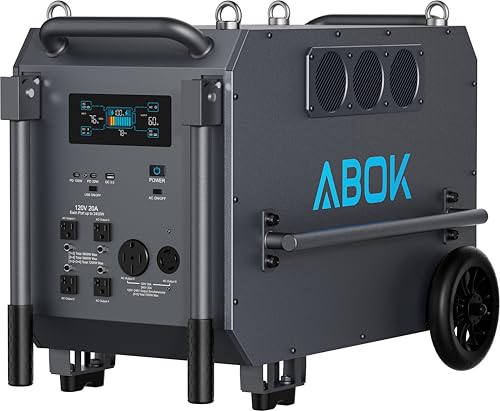
The Ark7200 Portable Power Station is a rugged, all‑in‑one solar generator built for anything from a construction site to a family emergency kit. Its dual‑voltage AC outlets (120 V / 240 V) deliver a clean 7200 W pure‑sine‑wave output, so you can run high‑power tools, refrigerators, or an RV’s entire electrical system without a hitch. Inside, a massive 9792 Wh EV‑grade LiFePO₄ battery provides more than 6,000 charge cycles—over a decade of daily use—while the integrated smart BMS protects against surges, overloads, and temperature spikes.
Recharging is lightning fast: combine up to 5 kW of AC input with up to 2.5 kW of solar PV for a 6200 W hybrid charge that fills the pack in roughly two hours. The built‑in UPS switches to battery power in just 10 ms, keeping computers, medical equipment, or workshop tools alive during sudden outages. A companion smartphone app lets you monitor real‑time consumption, toggle modes, and fine‑tune efficiency from anywhere. ABOK backs the Ark7200 with a 2 + 3‑year extended service plan and a nationwide network of service centers, while large‑freight delivery is coordinated through a dedicated trucking partner—just keep your Amazon contact info up to date.
Pros
- Dual‑voltage 120 V/240 V output handles both household appliances and heavy‑duty tools.
- Ultra‑large 9792 Wh LiFePO₄ battery offers >10 years of reliable use and thousands of cycles.
- Hybrid 6200 W fast recharge (AC + solar) can fully charge in ~2 hours, keeping you in continuous operation.
Cons
- The unit’s size and weight require truck delivery and may need a dedicated storage space.
- High initial cost, though offset by the long lifespan and low operating expenses.
5. GENMAX 15000W Tri-Fuel Portable Generator

The GENMAX 15000W Tri‑Fuel Portable Generator (2025 model) delivers a solid 11 kW continuous and 15 kW peak output from a robust engine paired with a 10.56 gal fuel tank—enough to keep essential appliances running through extended outages. Its tri‑fuel capability lets you switch effortlessly between gasoline, LPG, or natural gas, while three start options (one‑button, remote, and recoil) guarantee power at the press of a button, even in the toughest conditions.
The intelligent control panel puts real‑time data on a bright digital display, includes a DC cigarette‑lighter outlet, a battery‑charging port, and a 2‑wire automatic start/stop for solar‑battery integration. A built‑in CO sensor and an automatic voltage transfer switch (120 V/240 V) add layers of safety and flexibility, allowing seamless load transitions without manual rewiring.
A standout LED flexible rope light outlines the panel, staying illuminated for 30 seconds after shutdown—perfect for low‑light checks. The chassis, built on a ∮32 frame‑tube design, promises long‑term durability, and GENMAX backs the unit with a 1‑year warranty plus free lifetime technical support.
Pros
- Tri‑fuel versatility and three start methods give unmatched flexibility for home, job‑site, or emergency use.
- Smart control panel with digital readout, CO detection, and automatic voltage transfer simplifies operation and enhances safety.
- Durable construction (∮32 frame tubes) and generous fuel capacity ensure reliable, long‑lasting performance.
Cons
- Weight and size may require a sturdy cart or forklift for transport on construction sites.
- Peak‑power demand could exceed the capacity of some small‑scale solar‑battery setups without proper sizing.
4. Westinghouse iGen6500 Portable Generator
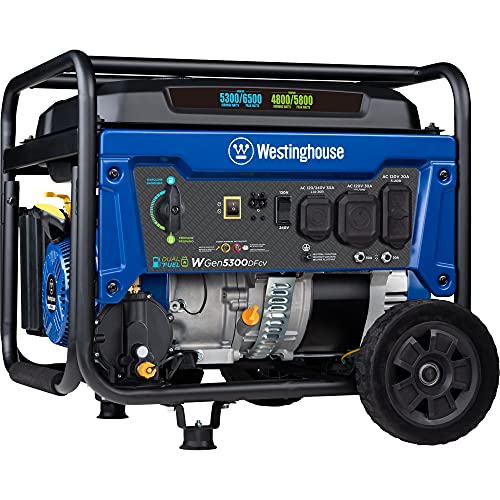
The Westinghouse 6500‑Watt Dual‑Fuel Portable Generator delivers reliable power when you need it most. With 5300 W running (6500 W peak) on gasoline and 4800 W running (5800 W peak) on propane, it can keep essential appliances, tools, or an RV running during outages. A 4.7‑gal fuel tank equipped with a clear gauge provides up to 14.5 hours of continuous operation, and the 120/240 V selector switch lets you match the output to your load. The unit is built around a robust 274 cc 4‑stroke OHV engine with a cast‑iron sleeve, and it features automatic low‑oil and carbon‑monoxide shutdown for added safety.
Three ready‑to‑plug outlets cover every scenario: a 5‑20R 120 V household duplex, an RV‑ready TT‑30R 30 A, and a transfer‑switch‑ready L14‑30R 30 A—each protected by rubber covers. The “plug‑and‑play” package includes oil, a funnel, propane hose, tool kit, wheel kit, and a user manual, so you’re up and running with minimal assembly. Westinghouse tests each generator in‑factory, meets EPA standards, and backs it with a 3‑year limited service, labor, and parts warranty plus nationwide support.
Pros
- Dual‑fuel flexibility – switch between gasoline and propane for longer runtime or convenience.
- Versatile outlets – household, RV, and transfer‑switch connections covered in one compact unit.
- Safety features – automatic low‑oil and CO shutdown, rubber‑covered receptacles, and CO sensor.
Cons
- Fuel tank size – 4.7 gal may require more frequent refueling for extended high‑load use.
- Weight & portability – despite wheels, the generator is on the heavier side for frequent moving.
3. Honda EB2200i Inverter Generator

The Honda EB2200i is a compact, 2200‑watt inverter generator built for the demands of construction sites, outdoor events, and emergency backup power. Its industrial‑grade inverter technology delivers clean, stable electricity that can safely run sensitive equipment such as computers and power tools. Weighing just over 47 lb, the unit is easy to transport yet robust enough for rugged job‑site conditions. A 0.95 gal fuel tank, paired with Honda’s Eco‑Throttle system, provides 3.2 – 8.1 hours of runtime, while the built‑in CO‑MINDER continuously monitors carbon‑monoxide levels and shuts the generator down before dangerous concentrations develop. Operating at 48‑57 dB(A), it’s whisper‑quiet—quieter than a normal conversation—making it ideal for densely populated work areas. Full GFCI protection ensures the generator meets OSHA compliance, and the extended ventilation design adds durability. Honda backs the EB2200i with a 3‑year residential warranty for peace of mind.
Pros
- Super‑quiet operation (48‑57 dB) keeps noise complaints at bay.
- Fuel‑efficient Eco‑Throttle delivers up to 8 hours on a single tank.
- OSHA‑compliant with GFCI & CO‑MINDER for enhanced safety on site.
Cons
- Not sold in California, limiting availability for West‑Coast users.
- Small 0.95 gal fuel tank may require frequent refueling during heavy‑load tasks.
2. Oxseryn 4400W Inverter Generator

The Oxseryn 4400‑Watt Inverter Generator delivers reliable, clean power wherever you need it—whether you’re parked at a campsite, powering essential appliances during an outage, or keeping your RV fully charged. With a peak output of 4400 W and 3400 W continuous, it easily runs lights, refrigerators, power tools, and more. The open‑frame, portable design weighs just 56 lb, so you can roll it from the garage to the campsite without breaking a sweat.
Thanks to its ECO mode, the generator can run up to 14 hours on a modest 2‑gallon tank at 25 % load, and the built‑in fuel gauge lets you monitor levels at a glance. Multiple outlets keep you powered: 2 × 120 V AC, 1 × 12 V DC, and an RV‑ready 30 A plug. Despite its power, it stays whisper‑quiet—under 72 dBA measured from 23 ft—making it ideal for nighttime use in tents or cabins. All units are factory‑tested; a faint gasoline scent on arrival is normal and not a sign of previous ownership.
Pros
- High output with versatile outlets – handles both household and RV loads.
- Long runtime & fuel‑efficient ECO mode – up to 14 h on a small tank.
- Low noise level – under 72 dBA, perfect for quiet environments.
Cons
- Fuel tank capacity is limited to 2 gal, requiring more frequent refills for extended full‑load operation.
- Open‑frame design offers less weather protection; a cover or shelter is recommended for rainy conditions.
1. WEN DF475T Portable Generator

The WEN DF475T is a versatile dual‑fuel generator that lets you switch between gasoline and propane with a simple dial, delivering 4,750 W surge (3,800 W running) on gas and 4,350 W surge (3,500 W running) on propane. Its 224 cc 4‑stroke OHV engine starts at the push of a key, and the 4‑gal tank provides up to 11 hours of run time at half load. Thanks to a built‑in voltage selector, you can toggle between 120 V and 240 V output, making it ideal for transfer switches, home backup, or powering larger tools. The generator comes ready to plug in: two 120 V GFCI outlets, a 120 V/240 V NEMA 30 A twist‑lock, a 12 V DC cigarette‑lighter socket, a 47‑inch LPG hose, wheel and handle kit, oil bottle, and a 2‑year warranty—all packaged for immediate use.
Pros
- Dual‑fuel flexibility – switch between gasoline and propane without tools.
- 120 V / 240 V output – covers everything from standard appliances to high‑draw equipment.
- Electric start & long run time – key‑turn ignition and up to 11 hours on a single tank.
Cons
- Running wattage drops on propane, so heavy loads may require careful fuel planning.
- Weight and size – the wheel kit adds bulk, making storage a bit more challenging for tight spaces.
Buying Guide
Choosing a generator for construction sites hinges on reliable power output, portability, and ruggedness to withstand harsh job‑site conditions.
- Power rating and fuel type – Match the generator’s wattage to the heaviest tools you’ll run, and pick diesel, gasoline, or propane based on availability and runtime needs.
- Durability and build quality – Look for reinforced frames, vibration‑absorbing mounts, and weather‑sealed enclosures that can survive drops, dust, and rain.
- Portability and ergonomics – Integrated wheels, fold‑away handles, and compact dimensions make it easier to move the unit around the site.
- Safety and noise features – Automatic low‑oil shutdown, circuit protection, and low‑decibel operation protect workers and comply with site regulations.
- Value and after‑sales support – Compare warranty length, service network, and user reviews to ensure long‑term reliability without hidden costs.
By weighing these factors you’ll select a generator that delivers consistent power, survives the job‑site environment, and offers the best return on investment.
Frequently Asked Questions
What size generator is ideal for a typical construction site?
Answer:
For most medium‑sized construction projects, a 10 kW to 15 kW portable generator provides enough power to run essential tools such as circular saws, drills, compressors, and lighting. If you need to operate heavier equipment (e.g., concrete mixers or larger compressors), consider a 20 kW‑30 kW standby generator with a higher surge capacity. Always calculate the total wattage of all devices you’ll run simultaneously and add a 20‑25 % safety margin.
Should I choose a gasoline, diesel, or propane generator for construction use?
Answer:
– Diesel generators are the most common on construction sites because they deliver high torque, have longer run times, and are more fuel‑efficient under heavy loads.
– Gasoline generators are lighter and cheaper but burn fuel faster and are better suited for short‑term, low‑power tasks.
– Propane (or dual‑fuel) generators offer cleaner emissions and quieter operation, making them ideal for indoor or noise‑sensitive areas, though propane tanks can be bulkier to transport.
Overall, diesel is usually the best all‑round choice for durability and power, while propane is a good secondary option when emissions or noise are a concern.
How important is fuel efficiency and what features improve it?
Answer:
Fuel efficiency directly impacts operating cost and how often you must refuel—critical on busy sites. Look for generators with:
- Automatic idle control that reduces engine speed when the load is low.
- Eco‑mode or load‑sensing technology, which adjusts output to match demand instead of running at full throttle constantly.
- Large fuel tanks (e.g., 15‑20 gal) that provide longer runtimes between refills.
A generator rated at 8–10 kW with an eco‑mode can often run 12‑15 hours on a single tank, saving both time and money compared to a less efficient model.
Conclusion
When choosing a generator for construction, the most critical factors are reliable power output, fuel efficiency, and rugged durability that can withstand harsh job‑site conditions. Prioritising models with robust safety features, easy maintenance, and noise‑reduction technology helps keep crews productive and compliant with site regulations. Considering the total cost of ownership—including fuel consumption, service intervals, and warranty coverage—ensures long‑term value, while portable designs with intuitive controls simplify relocation and setup. By aligning these criteria with the specific demands of each project, contractors can secure dependable, efficient power that drives progress and protects investment.