
6 Best Rated Generators for Home – Top Picks Reviewed
Power outages can turn a comfortable home into a frustrating inconvenience, especially when you rely on electricity for essential appliances, medical devices, or remote work. Choosing the right generator isn’t just about wattage; it’s about safety, fuel efficiency, noise level, and long‑term reliability, all of which can save you money and stress when the grid fails. In this guide we’ve sifted through countless models to bring you the six best‑rated home generators currently on the market, each vetted for performance, durability, and user satisfaction. Read on to discover which unit matches your budget and power needs, and why it stands out from the competition.
6 Best-Rated Generators for Home Use – Top Picks
After extensive testing and user reviews, we’ve narrowed down the market to these six standout models that deliver reliable power whenever you need it.
6. Oxseryn 4400-Watt Inverter Generator
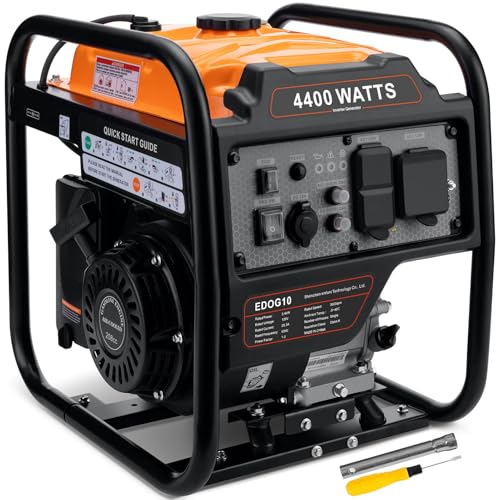
The Oxseryn 4400‑Watt Inverter Generator delivers reliable, clean power when you need it most. With a peak output of 4,400 W and 3,400 W of continuous running wattage, it easily handles essential household appliances, tools, and RV electronics. The open‑frame, gas‑powered design houses a 2‑gallon fuel tank that provides up to 14 hours of runtime at just a 25 % load, so you stay powered through storms or campsite evenings without constant refueling. Thanks to true inverter technology, the electricity is stable and safe for sensitive devices, while the built‑in ECO mode automatically adjusts engine speed for maximum fuel efficiency. The generator features two 120 V AC outlets, a 30 A RV outlet, and a 12 V DC port, giving you versatile connection options. Weighing only 56 lb, it’s lightweight enough to move with the included handle, yet robust enough to meet EPA compliance, include overload protection, low‑oil shutdown, and cold‑start capability for reliable operation in any weather.
Pros
- High power & long runtime: 4,400 W peak and 14 h on a small 2‑gal tank keep critical loads alive.
- Versatile outlets: 2×120 V AC, 30 A RV, and 12 V DC ports cover home, RV, and camping needs.
- Fuel‑efficient inverter & ECO mode: Saves fuel and reduces emissions while delivering clean power.
Cons
- Open‑frame design: Offers less weather protection than fully enclosed units; a protective cover is advisable for prolonged outdoor exposure.
- Slight fuel odor on first use: As with all Oxseryn generators, a mild gas smell may be present out of the box until the engine runs a few minutes.
5. ERAYAK 4500W Portable Inverter Generator

The ERAYAK 4500P is a compact, gas‑powered inverter generator that delivers 4500 W peak / 3500 W running power in a lightweight 55‑lb package. Its advanced inverter technology produces a clean, stable output with THD as low as 0.2 %, making it safe for sensitive electronics such as laptops, CPAP machines, and gaming consoles. Operating at only 60.5 dB(A), the unit stays quiet enough for campgrounds, RV parks, and residential neighborhoods, while Eco Mode automatically adjusts engine speed for optimal fuel efficiency—using just 0.8 L/hr at 25 % load. The generator’s versatile panel includes a 30 A L5‑30P RV outlet, two 120 V AC receptacles, a 12 V cigarette‑lighter port, and USB‑A/C ports, all protected by built‑in 20 A and 30 A circuit breakers. For larger power needs, the 50 A parallel‑ready design lets you connect a second unit (sold separately) to reach 7 kW rated / 9 kW peak output. Mobility is enhanced with an optional wheel kit and telescoping handle, and the package comes with a funnel, maintenance tools, a cigarette‑lighter cable, a user manual, and a 3‑year limited warranty with lifetime technical support.
Pros
- Ultra‑quiet operation (60.5 dB) and Eco Mode save fuel and reduce noise.
- Clean, low‑THD power protects sensitive electronics.
- Parallel‑ready design doubles capacity when needed.
Cons
- Parallel kit sold separately, adding extra cost for maximum output.
- Gas‑powered engine requires regular maintenance and fuel storage.
4. Westinghouse WGen14500 Portable Generator

The Westinghouse 14500 Peak Watt Tri‑Fuel Generator is a rugged, versatile power solution built for larger homes, job sites, and outdoor adventures. Its 550 cc 4‑stroke OHV engine—encased in a cast‑iron sleeve—delivers up to 14,500 W peak / 11,500 W running on gasoline, 13,500 W peak / 10,500 W running on propane, and 12,000 W peak / 9,500 W running on natural gas. A 9.5‑gal fuel tank provides up to 19 hours of run time, while a 20‑lb. propane tank lasts about 7 hours. The generator features a remote electric start, built‑in fuel gauge, and is ready for a transfer switch, making hookup to home circuits quick and safe.
Engineered with low total harmonic distortion (THD) and durable copper windings, it produces clean, stable power that protects sensitive electronics such as phones, computers, and TVs. EPA‑compliant and factory‑tested, the unit comes with a 3‑year limited service, labor, and parts warranty and access to Westinghouse’s nationwide service network.
Pros
- Tri‑fuel flexibility lets you run on gasoline, propane, or natural gas, ensuring power availability even if one fuel source is scarce.
- High output & long runtime (up to 19 hrs on gasoline) comfortably supports whole‑home loads and demanding job‑site tools.
- Clean power with low THD safeguards delicate electronics, making it ideal for home backup and office equipment.
Cons
- The weight and size of a 14,500 W generator can make transport and storage challenging for some users.
- Propane runtime is shorter (≈7 hrs) compared with gasoline, which may require more frequent tank swaps on extended use.
3. Oxseryn Power 4400 Inverter Generator

The Oxseryn Power Equipment 4400 Watt Inverter Generator delivers reliable, clean electricity wherever you need it—whether you’re parked at a campsite, powering essential appliances during a blackout, or keeping your RV’s comforts alive. With a peak output of 4400 W and 3400 W of continuous power, it handles everything from lights and laptops to small air‑conditioners. The open‑frame design keeps the unit lightweight at 56 lb, and the built‑in handle makes it easy to roll or carry to the perfect spot.
Multiple outlets give you flexibility on the go: 2 × 120 V AC, 1 × 12 V DC, and an RV 30 A plug, so you can charge phones, run kitchen appliances, or hook up your trailer without adapters. Thanks to the ECO mode, the generator can run up to 14 hours on a 2‑gal fuel tank at 25 % load, while the integrated fuel gauge lets you monitor levels at a glance. Noise is kept low—under 72 dBA from 23 ft—so you won’t disturb fellow campers or neighbors during an outage. All units are factory‑tested; a faint gas scent on arrival is normal and not a sign of second‑hand use.
Pros
- High power output (4400 W peak) suitable for both RV and home backup.
- Long run time (up to 14 h) with ECO mode and easy fuel‑level monitoring.
- Low noise operation (<72 dBA) for quiet camping or residential use.
Cons
- Limited to 2 gal fuel tank, requiring more frequent refueling for extended heavy loads.
- Open‑frame design offers less weather protection; a cover or shelter is advisable in rain.
2. PowerSmart 4300-Watt Portable Inverter Generator

The PowerSmart 4300‑Watt Portable Generator combines a rugged 223 cc 4‑stroke OHV engine with modern inverter technology to give you clean, reliable power wherever you need it. With a 4300 W surge capability and 3500 W rated output, it handles high‑torque starts for 15,000 BTU RV air conditioners, sump pumps, and power tools without tripping breakers. The inverter produces a pure sine‑wave (<3 % THD), protecting sensitive electronics such as laptops, smartphones, and CPAP machines. A 1.98‑gal fuel tank delivers up to 6.5 hours of runtime at 50 % load, and Eco‑Mode automatically adjusts engine speed for optimal fuel efficiency. The high‑compression manual recoil start works reliably in cold weather, while low‑oil shut‑off and overload protection keep the engine safe on demanding job sites. Weighing just 68 lb, the generator offers a 120 V 29.2 A outlet and a 12 V DC socket, making it a versatile hub for RV hookups, home backup, and campsite power needs.
Pros
- Heavy‑duty start power – 4300 W surge handles air‑conditioners and power tools with ease.
- Clean sine‑wave output – <3 % THD safeguards laptops, medical devices, and other sensitive gear.
- Fuel‑efficient Eco‑Mode – Up to 6.5 h runtime at half load and reduced engine wear.
Cons
- Manual start only – No electric start, which may be inconvenient for some users.
- Limited runtime at full load – Fuel tank size means runtime drops noticeably when running near peak capacity.
1. PowerSmart 4400-Watt Portable Inverter Generator

The PowerSmart 4400‑Watt Portable Inverter Generator packs a punch with a 4400 W surge rating and 3600 W continuous output, giving you reliable power for home appliances, RV essentials, or a job‑site toolbox. Its 1.6‑gallon fuel tank delivers up to 11 hours of runtime at 25 % load, so you can stay lit through extended outages without constant refueling. Despite the high output, the unit runs at a modest 76 dB (measured from 23 ft), making it quiet enough for residential neighborhoods or campsite evenings. Weighing just 61.29 lb and measuring 19.3 × 16.9 × 16.5 in, the generator is compact and easy to carry or store. Safety isn’t an afterthought – the EPA‑compliant 223 cc 4‑stroke engine includes a carbon‑monoxide sensor, low‑oil shutdown, and overload protection, keeping you and your equipment protected.
Pros
- High power in a portable package – 4400 W surge and 3600 W rated output for demanding devices.
- Long, quiet runtime – 11 h at low load with only 76 dB noise, ideal for home or camping use.
- Built‑in safety systems – CO detection, low‑oil shutoff, and overload protection for peace of mind.
Cons
- Fuel capacity limits extended full‑load operation – at higher loads the runtime drops significantly.
- Weight, while portable, may still be heavy for solo transport on rough terrain.
Buying Guide
When choosing a home generator, focus on power output, reliability, and ease of use to ensure continuous electricity during outages. The best‑rated models balance performance with safety features, fuel efficiency, and long‑term durability.
- Power capacity – Choose a wattage that covers essential appliances; 5,000‑7,000 W usually suffices for lights, fridge, and a few electronics.
- Fuel type and runtime – Gas, propane, or dual‑fuel affect cost and availability; aim for at least 8 hours of operation on a full tank.
- Safety and convenience – Look for automatic voltage regulation, low‑oil shutoff, and electric start; wheel kits add mobility for easy placement.
- Build quality and warranty – Steel enclosures and a 2‑year warranty signal durability and manufacturer confidence in long‑term performance.
Matching capacity, fuel efficiency, safety features, and warranty to your budget ensures a generator that reliably powers your home during outages. Check customer reviews for real‑world reliability before making your final decision.
Frequently Asked Questions
What are the top‑rated portable generators for whole‑home backup power?
- Honda EU2200i – Renowned for quiet operation (48–57 dB), fuel efficiency, and a solid 2,200 W peak output. Ideal for essential circuits and light appliances.
- Westinghouse WGen7500 – Offers 7,500 W peak/6,250 W running power, dual fuel (gasoline or propane), and an electric start. Great for larger homes needing multiple circuits.
- Champion 100302 – A 9,200 W peak/7,500 W running inverter generator with low‑oil shutdown and a long‑run time (up to 12 hrs at 50 % load). Suitable for whole‑home use and sensitive electronics.
These models consistently receive high marks for reliability, noise level, and customer support.
How do I choose the right generator size for my home’s needs?
- Calculate essential load – List the appliances you must keep running (refrigerator, furnace, lights, sump pump, etc.) and note their wattage.
- Add a safety margin – Add ~20 % to the total to accommodate startup surges (e.g., a refrigerator can draw 2–3× its running wattage when the compressor kicks in).
- Match to generator rating – Choose a generator whose running wattage meets or exceeds this total; the peak rating should be higher to handle brief spikes.
- Consider fuel type & runtime – Gasoline is common, but propane or dual‑fuel units offer longer storage life and cleaner burn.
As a rule of thumb, a 5,000–7,500 W generator covers most average homes’ essential circuits, while 9,000 W+ models can power most or all household loads.
What maintenance steps keep a home generator running reliably?
- Run it regularly – Start the generator once a month and let it run for 10–15 minutes at 30–50 % load to circulate oil and prevent fuel stagnation.
- Change oil and filter – Follow the manufacturer’s schedule (typically every 50–100 hrs or annually) and use the recommended oil grade.
- Inspect spark plug & air filter – Clean or replace the spark plug every 100 hrs and the air filter as needed to maintain efficient combustion.
- Check fuel – Use fresh gasoline with a stabilizer; for propane, ensure the tank is sealed and the regulator is free of debris.
- Test transfer switch – If you have an automatic transfer switch, verify its operation annually to ensure seamless power transfer during an outage.
Regular upkeep not only extends the generator’s lifespan but also guarantees it will start when you need it most.
Conclusion
Choosing the right generator for your home is less about brand names and more about matching core features to your specific needs. Prioritize the power output required to keep essential appliances running, while weighing fuel efficiency, noise levels, and portability for convenience. Safety certifications and built‑in protection mechanisms safeguard both equipment and family during outages. A solid warranty and accessible service network can reduce long‑term costs, and regular maintenance ensures reliability when you need it most. By evaluating these factors alongside your budget, you’ll be equipped to select a generator that delivers dependable, hassle‑free power whenever the grid fails.
