5 Best Small Solar Panels for Portable Power
Whether you’re powering a backpack‑mounted charger for weekend hikes, keeping a tiny off‑grid cabin lit, or simply looking to reduce your electricity bill with a portable solution, the right small solar panel can make all the difference between a reliable, efficient boost and a frustrating, under‑performing gadget. With countless models flooding the market—varying in wattage, durability, foldability, and price—picking the perfect fit can feel overwhelming. That’s why we’ve cut through the noise to spotlight the five standout small solar panels that combine top‑notch output, rugged construction, and smart features. Read on to discover which units earned our seal of approval and why they might be the ideal addition to your eco‑toolkit.
5 Top Small Solar Panels for Portable Power
We’ve tested dozens, and these five compact panels deliver impressive efficiency, durability, and convenience for on‑the‑go energy needs.
5. SOARAISE Solar 48000mAh Power Bank
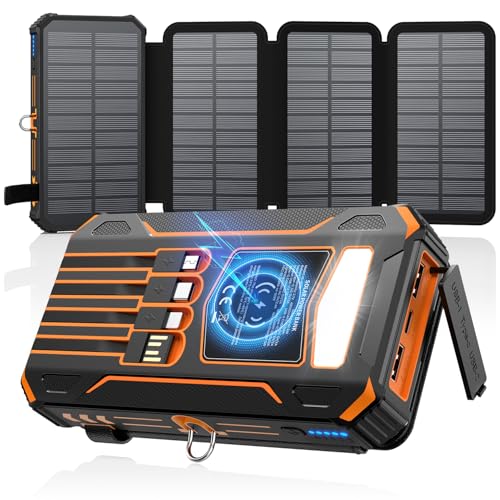
The SOARAISE Solar Charger Power Bank packs a massive 48 000 mAh lithium‑polymer battery into a rugged, travel‑ready case. Four high‑efficiency solar panels harvest sunlight up to five times faster than ordinary single‑panel chargers, letting you top‑up the pack even when you’re off the grid. A built‑in 5 V/3 A USB‑C PD port can push an iPhone from 15 % to 60 % in just 30 minutes, while PD and QC 3.0 support fast charging for Android phones, tablets, and other USB‑C gadgets.
Three output ports (2 × USB‑A, 1 × USB‑C) and four integrated cables (USB‑C, Lightning, USB‑A, Micro‑USB) mean you can power up to seven devices simultaneously without packing extra cords. The flat wireless‑charging pad adds true cable‑free convenience for any Qi‑enabled phone, and a bright LED flashlight is ready for night‑time emergencies. The high‑capacity Li‑Polymer cell delivers up to 80 % more charging cycles than typical Li‑Ion packs, ensuring long‑term reliability for extended camping trips, festivals, or travel adventures.
Pros
- Super‑fast solar input – four panels charge the pack up to 5× quicker than standard solar chargers.
- All‑in‑one connectivity – built‑in 4 cables + 3 ports + wireless pad cover virtually every device.
- Huge, durable battery – 48 000 mAh with 80 % more charge cycles for long‑term use.
Cons
- Solar charging speed depends on sunlight – cloudy or shaded conditions can significantly slow recharging.
- Weight and size – the high‑capacity pack is bulkier than typical pocket‑size power banks, which may affect portability for ultra‑light backpacking.
4. ECO-WORTHY 400W 4x100W Solar Panel

The ECO‑WORTHY 400W Solar Panel kit delivers reliable, high‑output power wherever you need it—whether on a remote off‑grid cabin, a camping site, a boat, or an RV. Each of the four 100 W monocrystalline modules uses PERC technology to reach 23 % cell efficiency, translating to roughly 1 600 Wh of daily energy after just four hours of full sun. The panels are thin (1.38 in) for rapid heat dissipation, yet robust enough to endure harsh weather. A waterproof IP65 junction box houses pre‑installed bypass diodes, so shading or low‑light conditions cause minimal power loss. Plug‑and‑play connectors and pre‑drilled mounting holes make installation a breeze for beginners, while the 35‑inch cables give you flexibility in positioning. The kit is designed as a solid foundation for 12 V or 24 V systems, allowing you to charge batteries, expand an existing array, or create a standalone hybrid setup for home, garden, or agricultural use.
Pros
- High efficiency & output – 23 % PERC cells provide up to 1 600 Wh per day in optimal sunlight.
- Excellent low‑light performance – Bypass diodes and IP65‑rated box keep power stable even with shade.
- Easy DIY installation – Lightweight panels, plug‑and‑play connectors, and pre‑drilled holes let beginners set up quickly.
Cons
- Separate packaging – The four panels arrive in two boxes, so you’ll need to wait for the second shipment before the full set is complete.
- Limited to 12 V/24 V systems – Not directly compatible with higher‑voltage grid‑tie configurations without additional equipment.
3. Sol-Air DIY Solar Systems

Dive into the world of renewable energy with DIY Solar Projects – Updated Edition. This hands‑on guide walks you through everything from pocket‑size solar chargers to full‑home photovoltaic systems, all explained in clear, step‑by‑step language. Even without a detailed feature list, the book’s reputation rests on its practical diagrams, real‑world cost breakdowns, and safety tips that empower beginners and seasoned makers alike. Each project is organized by difficulty level, allowing you to start small—building a solar‑powered garden light—and gradually scale up to a whole‑house installation, complete with wiring diagrams and grid‑tie considerations. The updated edition also incorporates the latest panel efficiencies and battery technologies, ensuring your builds stay current with today’s market.
Pros
- Scalable projects let you grow from simple gadgets to whole‑home systems at your own pace.
- Comprehensive cost analysis helps you budget accurately and see real savings on your electricity bill.
- Safety‑first approach includes clear wiring guides and code‑compliant tips, reducing the risk of mistakes.
Cons
- The lack of a detailed feature checklist may leave readers wanting a quick‑reference summary.
- Some advanced projects assume a basic understanding of electrical work, which could be a hurdle for absolute beginners.
2. VUEBEE 4W Solar Panel for Cameras

The VUEBEE 4W Solar Panel is a compact, high‑efficiency power source built specifically for DC 5 V rechargeable‑battery security cameras that charge via Micro‑USB or USB‑C. Its upgraded 4 W monocrystalline silicon cells convert sunlight into stable power, keeping your camera charged around the clock and dramatically cutting down on battery swaps. With an IP65 waterproof rating and an operating temperature range of ‑5 °F to 120 °F, the panel thrives in rain, snow, wind, or blazing sun—perfect for backyards, garages, driveways, or remote monitoring spots.
Installation is a breeze: mount the 360° adjustable bracket with three simple screws, run the included 3 m (10 ft) USB‑C/Micro‑USB cable, and you’re ready to go—no extra wiring or tools required. The flexible bracket lets you angle the panel for optimal sun exposure even when the camera itself sits in shade.
Pros
- High‑efficiency monocrystalline cells deliver faster, more reliable charging than standard panels.
- Robust weatherproof design (IP65) ensures continuous operation in harsh outdoor conditions.
- 360° adjustable mount with a 3 m cable provides versatile placement options for any installation scenario.
Cons
- Limited compatibility – not suitable for plug‑in cameras or brands like Arlo, Blink, Ring, Google Nest, and Kasa.
- Requires direct sunlight for peak performance; heavily shaded locations may see slower charging.
1. FellDen Micro Solar Panel Kit

The FellDen Micro Solar Panels kit delivers five compact 5 V, 200 mA polycrystalline cells, each measuring 110 mm × 60 mm (4.33″ × 2.36″) and only 2.5 mm thick. Every panel comes pre‑wired with durable leads, so you can start building right out of the box. Crafted with high‑quality epoxy resin and a proprietary sealing process, the panels resist wind, snow, and everyday wear, extending their service life. Their small footprint makes them perfect for DIY projects—whether you’re lighting a garden nook, powering a low‑current DC gadget, experimenting with a solar‑driven water pump, or assembling a miniature off‑grid power system.
Pros
- Ready‑to‑use wiring – eliminates soldering, speeding up prototyping.
- Robust construction – epoxy‑filled, weather‑proof panels survive outdoor conditions.
- Versatile application range – ideal for hobbyist experiments, educational kits, and low‑power home devices.
Cons
- Limited power output – 200 mA per panel suits small loads but isn’t enough for higher‑demand appliances.
- Fixed voltage – 5 V may require additional boost circuitry for devices that need higher voltage levels.
Buying Guide
When choosing a small solar panel, focus on the balance between power output, portability, and long‑term reliability. The most useful panels deliver consistent wattage while remaining lightweight and easy to install.
- Power rating and efficiency – Look for panels that provide at least 10 W of output with an efficiency of 18 % or higher, ensuring you get the most energy per square inch.
- Build quality and durability – Opt for units with rugged frames, UV‑protected glass, and an IP‑rated waterproof enclosure to withstand outdoor conditions.
- Portability and mounting options – Consider foldable or compact designs with built‑in kickstands, suction cups, or magnetic mounts that simplify placement on backpacks, windows, or RVs.
- Battery compatibility and charge controller – Choose panels that include an integrated MPPT controller or are compatible with common 12 V or 24 V battery systems for efficient charging.
- Customer reviews and warranty – Prioritize products with a strong track record of positive user feedback and at least a two‑year warranty to protect your investment.
By weighing these factors, you’ll select a small solar panel that delivers reliable power, survives the elements, and offers solid value for everyday off‑grid needs.
Frequently Asked Questions
What size solar panel is ideal for charging a smartphone or small gadgets?
A 5‑10 W panel is usually sufficient. It can generate enough power in full sun to charge a phone, Bluetooth speaker, or portable power bank within a few hours. Look for a panel that includes a built‑in USB‑C or micro‑USB port with 5 V/2 A output for fast charging.
How do I compare efficiency among small solar panels?
- Watt‑per‑square‑inch (W/in²) – Divide the panel’s rated wattage by its surface area. Higher values mean more power from the same amount of sunlight.
- Conversion efficiency (%) – Manufacturers often list this (e.g., 22%). It tells you how much of the incoming solar energy is turned into electricity.
- Peak Sun Hours (PSH) – Check the panel’s performance under standard test conditions (1000 W/m², 25 °C). Panels that maintain output at higher temperatures are better for hot climates.
Choose a panel with ≥20 % efficiency and a high W/in² rating for the smallest, most powerful option.
What maintenance steps keep a small solar panel performing at its best?
- Keep it clean: Dust, pollen, and bird droppings reduce output. Wipe the surface with a soft, damp cloth every few weeks.
- Avoid shading: Even a small shadow can cut power dramatically; place the panel where it gets full, unobstructed sun.
- Inspect connections: Check cables and connectors for corrosion or fraying; replace any damaged parts promptly.
- Store properly: If you’re not using the panel for an extended period, store it in a cool, dry place and charge the battery pack every 2–3 months to prevent deep discharge.
Regular care ensures the panel stays efficient and lasts for years.
Conclusion
As you’ve seen, the appeal of compact solar panels lies in their blend of portability, efficiency, and durability, making them a practical power source for a wide range of outdoor activities and off‑grid applications. By focusing on high conversion rates, robust weather‑proof designs, and thoughtful accessories, today’s models deliver reliable energy without breaking the bank. Whether you’re camping, RV‑traveling, or simply looking to reduce your household footprint, the right small panel can provide a seamless, eco‑friendly supplement to traditional electricity. Ultimately, choosing a unit that balances performance, build quality, and price ensures you get the most out of every ray of sunshine.