6 Must-Have Best Solar Power System Products
Switching to solar isn’t just a trendy eco‑choice; it’s a long‑term investment that can slash your electricity bills, boost home value, and reduce your carbon footprint. But with a flood of panels, inverters, batteries and mounting kits on the market, picking the right system feels like navigating a maze. The right combination can deliver reliable power year‑round, fit your roof’s layout, and stay within budget, while a mismatched set may waste money and underperform. In this post we’ve cut through the clutter to spotlight the six best solar power system products currently available, highlighting their key features, performance metrics, and ideal use cases. Read on to discover which solution aligns with your energy goals.
6 Top-Rated Solar Power Systems You’ll Love
We’ve evaluated performance, durability, and value to bring you the six most reliable solar power systems on the market today.
6. Renogy LH20K Hybrid Solar Kit
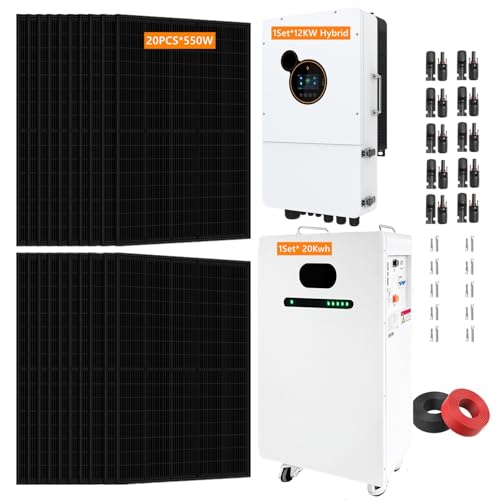
The 20 kWh Hybrid Solar Power System delivers a truly all‑in‑one energy solution. It bundles 20 × 550 W high‑efficiency solar panels (total 11 kW) with a 48 V 12 kW pure‑sine‑wave inverter that includes a built‑in MPPT controller, plus a 51.2 V 406 Ah LiFePO₄ battery (20 kWh). This seamless integration lets you run completely off‑grid or stay connected to the utility, giving you full control over when and how you use power.
Designed as a long‑term investment, the kit provides reliable backup during outages, reduces dependence on an unstable grid, and enhances safety and comfort for any home or small business. With MPPT tracking efficiency up to 99 % and peak conversion efficiency of 98 %, the system extracts the maximum energy from every sun hour, while the inverter’s 95 % overall efficiency ensures minimal waste.
Whether you’re powering an RV, cabin, shed, or full‑size home, the 20 kWh daily output can comfortably run TVs, air conditioners, refrigerators, and other essential appliances. All components arrive pre‑tested, securely boxed, and supported with wooden frames for easy transport—just allow 40‑50 days for delivery.
Pros
- Complete, plug‑and‑play kit – panels, inverter with MPPT, and lithium battery all in one package.
- High efficiency – up to 99 % MPPT tracking and 98 % peak conversion, maximizing solar harvest.
- Robust backup power – 20 kWh battery provides reliable energy during blackouts.
Cons
- Delivery time – 40‑50 days may be longer than expected for urgent installations.
- Initial cost – upfront investment is significant, though offset by long‑term savings.
5. ECO-WORTHY 48V Solar Kit
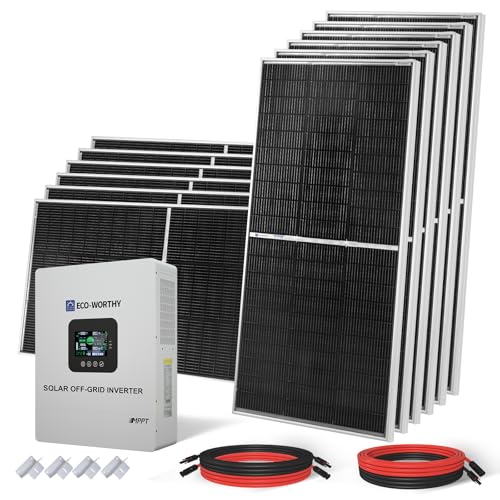
The ECO‑WORTHY 9.36 kWh Off‑Grid Solar Power System Kit is a plug‑and‑play solution that turns sunlight into reliable 110 V AC power for homes, cabins, farms, or any off‑grid application. Twelve 195 W N‑Type mono panels (58.86 × 26.18 × 1.38 in) deliver a daily output of up to 9.36 kWh in just four hours of full sun, thanks to a 25 % conversion efficiency, 18‑bus‑bar cells, and double‑sided generation that adds roughly 100 Wh per panel each day. The panels are IP68‑rated, feature tempered glass and corrosion‑resistant frames for a 30‑year lifespan.
At the heart of the system is a 5000 W 48 V pure‑sine‑wave inverter paired with a 100 A MPPT charge controller. It offers four charging modes, hybrid solar/mains capability, 99.9 % efficiency, and zero EMI, providing clean, uninterrupted power for AC appliances such as air conditioners, refrigerators, microwaves, and more. The inverter can be paralleled with up to five additional units (up to 30 kW total) and supports 120 V, 208 V, or 240 V outputs for flexible scaling.
The kit comes complete with all 12 panels, the 5000 W inverter, Z‑mount brackets, and all necessary wiring and hardware—ready for a professional installer to hook up and start generating clean energy right away.
Pros
- High daily energy yield: 9.36 kWh from a compact 2340 W array, enough for most household AC loads.
- Advanced N‑Type panels: 25 % efficiency, 18‑bus‑bar design, double‑sided generation, and IP68 durability for long‑term performance.
- Scalable inverter: 5000 W pure sine wave output with MPPT, 99.9 % efficiency, and parallel capability up to 30 kW.
Cons
- Professional installation required: DIY setup may void warranty and pose safety risks.
- Initial cost: High‑efficiency panels and a large inverter make the upfront investment larger than basic kits.
4. ECO-WORTHY 10KW Solar Kit

The ECO‑WORTHY 10 kW Off‑Grid Solar System is a complete, plug‑and‑play solution that delivers up to 9.36 kWh per day from its 12 × 195 W N‑Type bifacial panels (total 2 340 W). The high‑efficiency 25 % cells, 18‑busbar design and double‑sided generation give you extra daily energy while the IP68‑rated tempered glass guarantees a 30‑year lifespan. Power is converted by a 10 kW UL‑1741 certified inverter that can run continuously, supports parallel expansion to 60 kW (up to six units), and includes Wi‑Fi for remote monitoring. Energy storage is handled by two 48 V 100 Ah lithium batteries (UL‑1973 & UL‑9540A), which communicate via CAN/RS485 and can be tracked in real‑time through a Bluetooth/Wi‑Fi mobile app. The system offers three output priorities (mains, battery, PV) and four charging modes, letting you tailor when the grid or solar supplies power and when the batteries charge or discharge.
Pros
- High daily output (9.36 kWh) supports AC 240 V appliances such as air conditioners, refrigerators, and microwaves.
- Scalable and smart: inverter can be paralleled for up to 60 kW and includes Wi‑Fi/Bluetooth monitoring plus flexible charging modes.
- Robust safety certifications (UL‑1741, UL‑1973, UL‑9540A, CEC) and advanced thermal‑runaway management for peace of mind.
Cons
- Requires professional installation; DIY setup may void warranties and affect performance.
- The initial investment is sizable, which may be a barrier for budget‑conscious buyers despite long‑term savings.
3. ECO-WORTHY Solar Kit 1200W 48V

The ECO‑WORTHY 4.68 kWh Solar Power Complete Kit delivers reliable, off‑grid electricity for a modern home or cabin. Six high‑efficiency 195 W N‑type bifacial panels (25 % conversion, 18‑busbar design) capture sunlight from both sides, producing roughly 4.68 kWh per day under four hours of full sun. Power is stored in a robust 48 V 50 Ah LiFePO₄ battery (2560 Wh capacity) and converted to clean 110/120 V AC by a 3500 W inverter with 7000 W surge capability, Wi‑Fi monitoring, and 20 ms UPS switching. The system includes all necessary mounting hardware, cables, and communication modules (Bluetooth, RS485, CAN, RS232), making installation straightforward.
Pros
- High daily output (≈4.68 kWh) supports air‑conditioners, refrigerators, TVs, microwaves, and more.
- Advanced N‑type bifacial panels retain efficiency at high temperatures and boost energy harvest from reflected light.
- Smart inverter & battery management with Wi‑Fi app, 100 A BMS, and 63 A breaker ensure safe, stable power and easy remote monitoring.
Cons
- Initial investment is higher than basic DIY kits due to premium panels, LiFePO₄ battery, and inverter.
- Battery capacity (50 Ah) may be insufficient for multi‑day autonomy without adding parallel batteries.
2. Renogy Lycan 800 Solar Power Kit
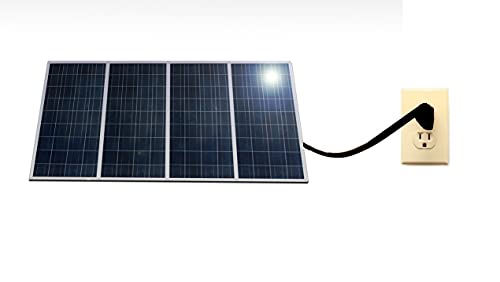
The Plug‑and‑Play Solar Panel Power system puts clean energy at your fingertips. Just unfold the four 200 W solar panels, place them in direct sunlight, and plug the 50‑ft cord into any standard wall outlet. The built‑in micro‑inverter with an integrated power monitor instantly converts sunlight to usable AC power, delivering up to 800 W of continuous output. With an estimated annual generation of 1,500 kWh, most households can shave 20‑40 % off their electricity bills without any complicated wiring or permits. The kit arrives in two shipments—one for the micro‑inverter and cord, and a second for the panels—ensuring each component is protected during transit.
Pros
- Ultra‑simple installation: No mounting hardware or professional electrician required; just plug and go.
- Immediate cost savings: Up to 40 % reduction in monthly electric bills with an estimated 1,500 kWh/year production.
- Portable power: The 50‑ft cord and lightweight panels make it easy to relocate the system for seasonal shading or outdoor events.
Cons
- Limited to grid‑connected use: The system relies on a wall outlet and cannot operate off‑grid or provide backup power during outages.
- Separate shipments: Receiving the inverter and panels in two packages may delay full setup for some users.
1. Renogy Lycan 5.12kWh Solar Kit

The 5 kW Home Off‑Grid Solar Power System is a turnkey solution that lets you stay powered when the grid goes down or when you live completely off the grid. A set of twelve 200 W monocrystalline panels (10‑busbar half‑cut cells) harvest up to 9.6 kWh of clean energy each day, while a rugged aluminum frame and tempered‑glass modules survive 2400 Pa wind and 5400 Pa snow loads. Energy is converted by a 5000 W pure‑sine‑wave inverter paired with an 80 A MPPT controller (up to 6 kW solar input, 99.9 % tracking efficiency), delivering stable power to lights, appliances, and more.
The included 51.2 V 100 Ah LiFePO₄ battery stores 5.12 kWh, offering over 4,000 cycles and a 10‑year lifespan. Its built‑in BMS safeguards against over‑charge, short‑circuit, and temperature extremes, and real‑time status is viewable via a dedicated Wi‑Fi app that also lets you switch between four charging/output modes.
All cables you need are in the box—four 10 AWG × 16 ft extension pairs and two 10 AWG × 6.5 ft connection pairs—so installation is straightforward, and the system can be expanded with additional panels or batteries as your energy needs grow.
Pros
- High daily output (≈9.6 kWh) from premium half‑cut monocrystalline panels
- Long‑life LiFePO₄ battery with >4,000 cycles and built‑in BMS
- Smart MPPT inverter with Wi‑Fi app monitoring and multiple safety protections
Cons
- Initial cost is higher than basic DIY kits; best suited for users who need reliable, long‑term off‑grid power.
- System size (12 panels, inverter, battery) requires ample roof or ground space for optimal installation.
Buying Guide
Choosing the right solar power system hinges on matching your energy needs, site conditions, and budget while ensuring long‑term reliability and performance. Look for a solution that balances efficiency, durability, and support.
- Panel efficiency and quality – High‑efficiency, reputable‑brand panels convert more sunlight into electricity, maximizing output on limited roof space.
- Inverter type and features – A reliable inverter with built‑in monitoring, grid‑support functions, and a suitable power rating ensures smooth energy conversion and easy system oversight.
- Durability and warranty – Robust frame construction, tempered glass, and a comprehensive warranty (typically 10‑25 years) protect your investment against weather and degradation.
- System size and scalability – Select a system sized for current consumption with the option to expand later, accommodating future energy demands or battery storage.
- Customer reviews and after‑sales service – Positive user feedback and responsive support indicate a trustworthy installer and help avoid hidden issues.
By weighing these factors—efficiency, technology, durability, flexibility, and reputation—you’ll select a solar power system that delivers reliable, cost‑effective clean energy for years to come.
Frequently Asked Questions
What factors determine the “best” solar power system for my home?
- Energy needs: Calculate your average monthly kWh usage (utility bills) to size the system correctly.
- Roof condition & orientation: South‑facing roofs with minimal shading get the most sunlight; tilt angle and roof age matter.
- Panel efficiency & temperature coefficient: Higher efficiency panels (e.g., monocrystalline) produce more power per square foot, but check how performance drops in hot weather.
- Inverter type: String inverters are cost‑effective; micro‑inverters or power optimizers improve output on partially shaded roofs.
- Warranty & certifications: Look for ≥25‑year performance warranty on panels and ≥10‑year inverter warranty; UL/IEC certifications ensure safety.
- Local incentives: Tax credits, rebates, and net‑metering policies can significantly affect total cost and ROI.
Should I choose a grid‑tied, off‑grid, or hybrid solar system?
- Grid‑tied: Connects to the utility; excess energy is fed back (net‑metering). Ideal for most homeowners because it’s the cheapest and provides backup power from the grid.
- Off‑grid: Completely independent; requires batteries and a larger inverter. Suitable only for remote sites with no reliable grid access.
- Hybrid (grid‑tied with battery backup): Gives you the benefits of grid connection plus stored energy for outages or time‑of‑use rate management. It adds cost but improves resilience.
How do I evaluate the cost‑effectiveness of a solar installation?
- Calculate the Levelized Cost of Energy (LCOE): Total installed cost (including permits, labor, and hardware) divided by the projected lifetime energy production (kWh).
- Factor in incentives: Apply federal tax credit (currently 30 %), state rebates, and any local utility rebates to reduce upfront spend.
- Estimate savings: Multiply your average monthly usage by your utility’s kWh rate, then adjust for expected production and any net‑metering credits.
- Determine payback period: Divide net upfront cost by annual savings; a 5‑10 year payback is typical for high‑quality systems.
- Consider ROI and NPV: Use a discount rate (often your loan interest or a 5‑7 % hurdle rate) to compute the net present value of cash flows over 25‑30 years. Positive NPV indicates a financially sound investment.
Conclusion
In essence, the most effective solar power setups blend reliable efficiency, scalability, and smart integration, allowing homeowners to maximize energy capture while minimizing maintenance and long‑term costs. Prioritizing robust inverters, high‑performance panels, and adaptable mounting solutions ensures the system can evolve with future technology and household needs. Coupled with thoughtful monitoring tools and reputable warranties, these choices empower users to achieve meaningful savings, reduce their carbon footprint, and enjoy a resilient, self‑sufficient energy source for years to come. By focusing on quality, compatibility, and support, you can confidently harness the sun’s power and reap its benefits well beyond the initial investment.